
Today’s post was written by Paul.
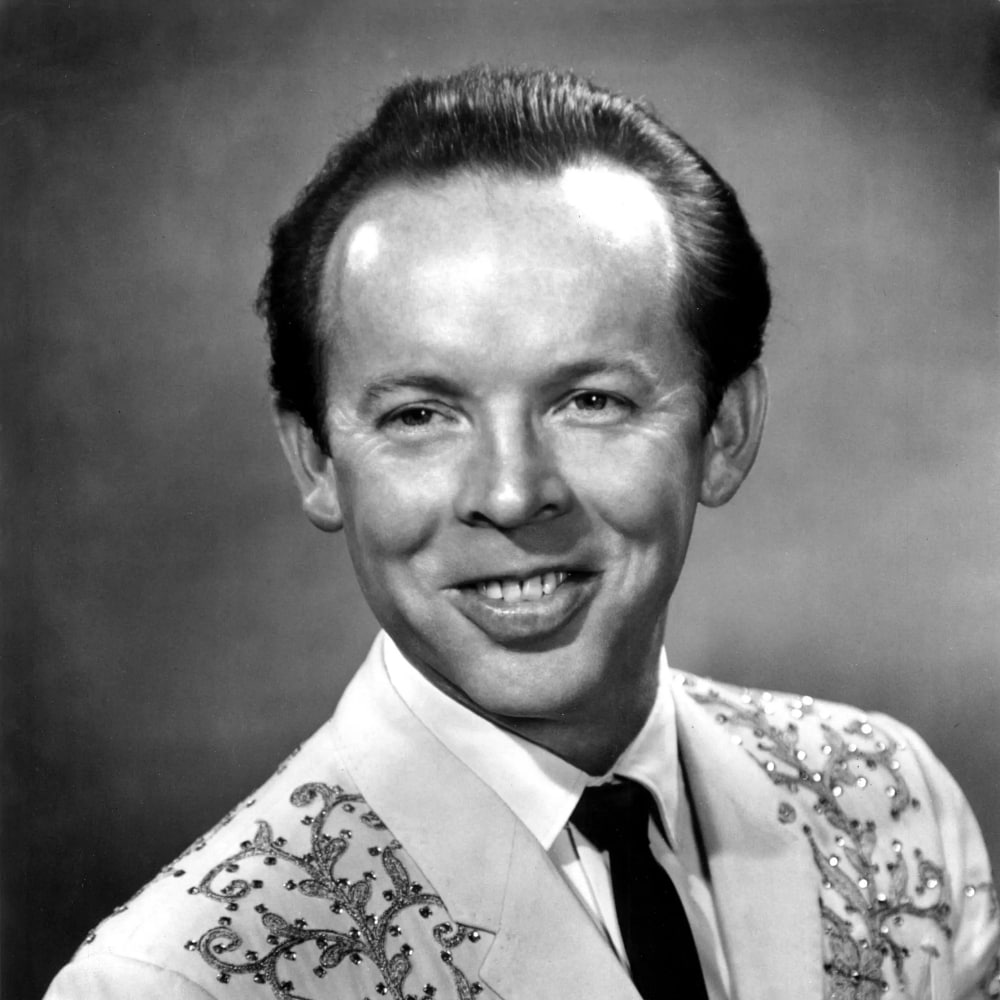
Charlie Louvin
The old song “Which-A-Way” reminds me of my Uncle Henry for two reasons: 1) he had the “Will You Visit Me on Sunday?” album in his bedroom (I discovered it while waiting for the school bus at his house one morning—I “borrowed” it and never returned it :), and 2) he could blow really good smoke rings when he was smoking a cigarette. 🙂
As I said in the video, it’s obviously completely wrong to break your marriage vows, but I believe the speaker in this song answers his own question regarding which way he should turn. I believe his answer comes clearly in the third verse. The speaker says, “If I should turn to my right hand, I’ll break a heart and a home.” Because men and women wear their wedding rings on their left hands, turning to his right hand symbolizes choosing the other woman (i.e. not his wife). The next line is, “If I should turn to my left hand, I’ll break nobody’s heart but my own.” I think that line makes it plain that the other woman doesn’t truly love him (and he knows it), and she would be at least somewhat indifferent if he chose to stay with his wife.
Although he may be “heartbroken” by losing this other woman, since she doesn’t love him (and his wife does love him), what would he have truly lost?
Today’s video is in honor of Charlie, but his brother Ira wrote a love/cheating song with the following lines: “How could you want me if I were untrue? You should know, if I’d cheat her, then I’d cheat you too.” That would also be an important idea for the speaker in “Which-A-Way” to keep in mind: if this lady would fool around with a married man, then she would probably also fool around with someone else if they became a couple.
“Which-A-Way” doesn’t explicitly reveal whether or not the other woman knows that he’s married, so that precept might not fully apply here. However, we might be able to assume that she does in fact know he’s married, because the speaker addresses her in second person (“you”) while discussing his wife’s existence.
I was surprised to find that Charlie sang this song in C, which is quite low for the lead vocal. By this point in his career, he didn’t need to save “room” for his brother Ira to sing above him, so perhaps he sang the song in C for the sake of the guitar playing. On the other hand, it may be more likely that he just liked the key of C for this song (for some reason) because Nashville studio musicians can play anything in any key and make it sound good. For my voice, this song probably needs to be about four frets higher, in E.
I recently discovered a YouTube channel that has a ton of rare, classic country music, including many solo recordings of Charlie that I had never heard before. I’m currently listening my way through those songs.
You can see the channel here. If you want to hear more solo stuff from Charlie, going to that channel and searching for his name is probably the easiest way for you to do that. On that channel, I found a really beautiful cut of Charlie singing “How Great thou Art.” Something about that recording sounds impromptu, but it’s still very good, and as Pap would say, it’s loaded with feeling.
Hope you enjoyed today’s video!
Paul
Original singles released on Spotify.
Shepherd of My Soul (Album released in 2016).
The Wilson Brothers Words of Life Album released in the 70s.

Thanks for introducing me to another old song new to me…you sang and played it so well!
❤️
Paul , I enjoyed that song. The guitar sounded so good.
Awesome!
Thank you for the great music Paul. I hope you and everyone else have a wonderful week ahead.
I love the Louvin Brothers music. Thank you for sharing and as always you challenge us to look deeper into the meaning and I appreciate it. I never think about those things unless it’s a gospel song. Have a great week!
Thank you Paul – a good way to begin a morning – hearing you singing and picking.
♫ Where could I go but to the Lord? ♪
I had not heard this before, that I remember. I have had a stroke and sometimes my mind plays tricks on me. It has a beautiful melody. I always enjoy anything you sing. God bless you.
Beautiful singing and what a lovely guitar sound, Paul!
Thank you and have a great week.
thank you for praying for me , thank you all, may the good Lord bless you and your family very much in Jesus name, thank you for the song Paul, Heavenly father in the name of Jesus, today I think about Matt’s father, Tippers husband father Tony, please oh Lord in Jesus name, bless him with deliverance from sickness and disease, please comfort him, strengthen him, bless the doctors with knowledge and wisdom of the situation at hand, bless all medications, all treatments, for his deliverance and healing in the name of Jesus our savior, Amen
Thank you Norman!! I’m praying for you!!
Hi Paul. TY for your video and the links.
As always Thanks Paul for the great music. My parents loved the Louvin brothers.
I also borrowed a album from my Uncle and never returned it. He told me to keep it. It was the album Dust on Mother’s Bible by Buck Owens
hope everyone has a great blessed Sunday
Between dating/going together and marriage that started in high school, I was with my wife for very close to 50 years. I can truly say we never once cheated on each other even though there was plenty of opportunities with me working 7 day rotating shifts. I saw a lot of it going on in my 38 years of doing this. Many reasons for having a long marriage, two I think at the top, God in your marriage and TRUST. I never had to worry about where or what she was doing when I was working on the weekend or the back/night shifts. I never gave her a reason not to trust me when I was working or out with a friend hunting or fishing. I never understood how you could completely trust someone if they and maybe you too were cheating on your spouse when you began dating and maybe married them. I like to joke and say I would look at the menu but never saw anything on it worth losing my family on it. Now my wife has been dead for over 5 years and I still have no desire for anyone else, in my mind I would feel like I was cheating on her.