

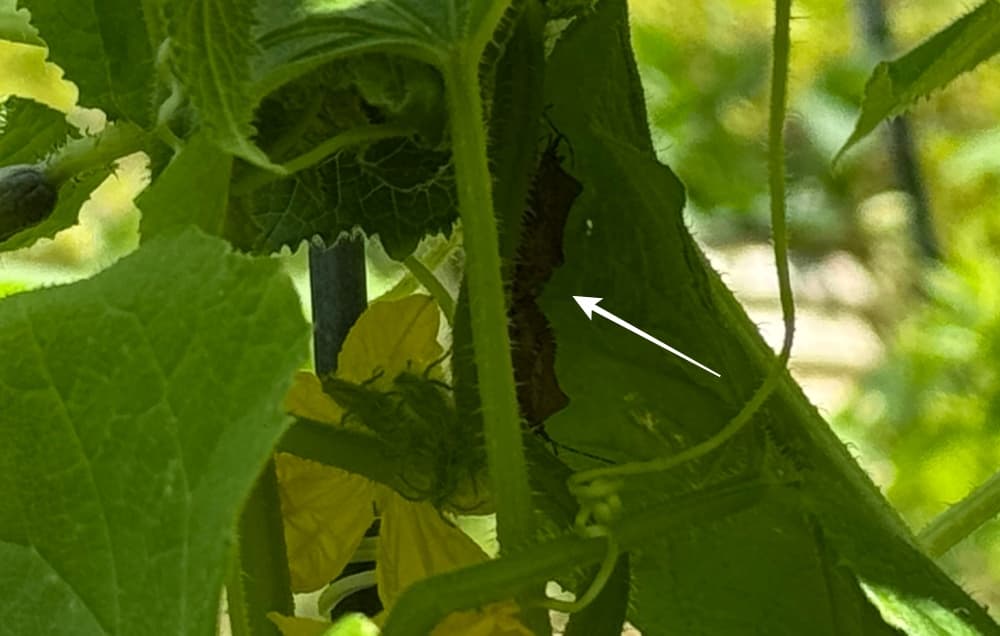
The dreaded squash bugs have already found my cucumbers! I picked several off yesterday. I’m going to have to make a batch of pepper spray and get after them.
In my class last week I learned a few plants that I’m familiar with are good at repelling pests.
Mountain mint grows at the bottom of Granny’s driveway. I learned it can be used as a bug repellant.
Elderberry grows along our road and in our backyard where I planted two plants a few years back. The leaves are said to repel all bugs.
The first time I was introduced to stinging nettle was in mine and Matt’s courting days. I was tagging along with him on a trout fishing trip in the Sunburst area of Haywood County. He decided to take a shortcut down the mountain instead of walking the switchbacks.
It was way up in the summer and I had shorts on. We hadn’t gone very far before my legs starting stinging all over. I yelled at Matt and he came back to see what was going on. He apologized for taking me directly through a big patch of stinging nettle. He had long britches on so he didn’t even notice it.
Stinging nettle is edible and is medicinal. Cooking it takes the sting out so there’s no worries about having a burning mouth.
None grew here in Wilson holler until I started some in one of my raised beds on the bank.
The girls make a nettle tea to help with their allergies, the liquid can also deter soft bodied bugs.
I haven’t tried any of the remedies so I don’t know their success rate, but I’ve already spread elderberry leaves around my cucumbers in the hopes it helps.
Last night’s video: Picking Berries in the Rain & Making Matt’s Favorite Jelly (Black Raspberry).
Tonight’s video will be a premier of a short documentary I was asked to be in about Cornbread. The premier starts at 6:00 p.m. est. You can find it here.
Here’s a bit about the project and the director.
Willow Lawson is a Morehead-Cain scholar at the University of North Carolina at Chapel Hill, studying American Studies and Food Studies. She is from Mount Airy, NC, and has a heart for promoting stories that share the beauty of Appalachia. The Memory of Cornbread was a project done to show how communities in Appalachia feel connected to cornbread both through history and family. It was screened at the Boone Docs Film Festival. Her current work seeks to understand the state of small farmers in NC and how we can better support them.
Tipper
Subscribe for FREE and get a daily dose of Appalachia in your inbox

Praying you win the fight against the bugs! Blessings to y’all!
I watched the documentary about cornbread and it was really interesting. I’m 73 and have eaten and loved good homemade cornbread all my life. You spoke very well and presented the roots of the Appalachian staple, cornbread beautifully.
Looking forward to the premier ! Best of luck in winning the fight against the squash bugs !
Prayers for all !
Looking forward to the video, Tipper! I love all your videos!
I enjoy learning about plants tjat help us . Thank you Tipper!
I needed a less noxious insect repellant. I found that mixing peppermint essential oil concentrate with rubbing alcohol, witch hazel, and a drop dish soap works great, especially for spiders and mites. It can be used in places where petroleum based insecticides would be inappropriate.
Sorry, I don’t have any garden related DIY remedies for you.
praying for Papaw Tony!
Those hateful squash bugs!!! Thanks for the recipes. I check my squash plants for these devils daily. I will try your pepper recipe at first sighting, as I know they will show up. They always do. Congratulations on the film. I look forward to watching later. Good for the student from Mt. Airy to teach UNC a thing or two. 🙂
Congrats on your documentary debut! If anyone could talk about cornbread it would be you. Growing up in Texas , the only difference in cornbread is I grew up with my mom putting a couple of teaspoons of sugar in the batter. I inherited her cast iron skillets such is as you recommend the only way to make good crusty cornbread. We live in a hughrise in downtown Dallas and are avid watchers of your show. You are a diverse viewership and fan base. Thanks for your hospitality of inviting us into your home. We love watching the garden grow, the harvest, the meals, and putting up vegetables for the winter months. Your show is a anchor for seasonal living and grounds people no matter where they live.
We hope you amd the family continue to produce Celebrating Appalachia!
Looking forward to seeing the premier! I have a reminder set so I don’t forget to watch at 6:00
I appreciate learning any and all natural bug repellents. Such interesting info here! We have stinging nettle growing all over on our property. A good and bad problem at the same time. 🙂 Trying to get it out of our asparagus bed right now. Because it spreads by runners it’s really hard to eradicate.
Nettles are rich in many vitamins and minerals, including iron, calcium, magnesium, potassium, and vitamin C. They’ve been used for generations as a nourishing spring food after a long winter. I recently learned an easy way to preserve them: Harvest the tops when they are tender, do a quick blanch (about 30
seconds), place in ice water bath and then drain. You can then blend the nettles into a puree and freeze in ½-cup or 1-cup portions to add nettles to soups, egg dishes, smoothies, breads, muffins, and even cake throughout the year!
I am looking forward to the Cornbread premier. It was fun to read about Willow. Thank you, Tipper!
I hope some or all of your natural repellants work on your squash bugs. I am excited to see you in the documentary this evening. Your cornbread always turns out so perfect. I always did use an iron skillet to make mine, but I never preheated it until I watched you do it.
Natural is always the best and preferred way to go in everything we do! I’m pleasantly surprised about all the valuable information you learned in your classes and life lessons and your knowledge and persist thereof I find refreshingly enlightening and most interesting. Stinging nettle tea for allergies sounds like a dang great idea! Pepper spray for bugs sounds great and I myself would like to hit those pests with Carolina Reaper or Ghost pepper juice and that would really get them out! lol. I hate pesticides but if anybody thinks I’m gardening and spending big money to just hang around and play, they’ve got another thing coming. It’s my food and I take it kind of seriously when insects, deer and the like snatch up or destroy my potential bounty and food supply. I may physically altercate when some critter attacks my food. Period. It’s behind a fence because deer in Southwest Virginia don’t eat grass when there are strawberry leaves and cucumber leaves to twang the buds! Our deer here have grown accustomed to better niblets than plain grass and old acorns. Lol It seems in this life we are always fighting or fending off stuff now don’t it just to keep what’s ours… have a beautiful day and I’ll see you in the garden!
Congratulations on being chosen to be in the documentary, what an excellent way to help preserve history!
We use diatomaceous earth as a natural bug repellent in our gardens and it really does work. The draw back is if you’re using an applicator that blows it on the plants, you need to wear an N95 mask. You can also sprinkle it on, but the applicator does a better job for overall coverage.
Nettles can be boiled and sauteed and then mashed in with potatoes, in a variation on the traditional Irish dish colcannon, which is usually taters and cabbage, or kale (but can be any green, really). Many European countries have some greens-and-taters side dish, but especially the British Isles (“rumbledethumps” in Scotland, “bubble-and-squeak” in England). You could probably even make kudzu palatable by cooking it this way.
https://lifesourcenaturalfoods.com/recipe/spring-wild-nettles-colcannon/