
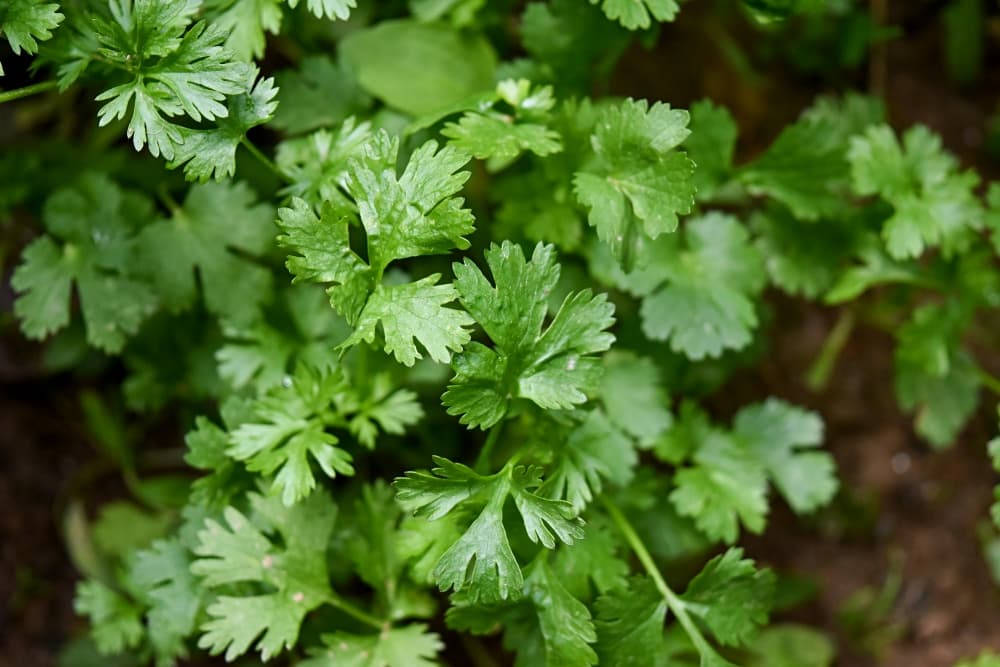
I never cared for the taste of cilantro until a lady at work started bringing in fresh guacamole. At first, I tried to pick out the pieces, that was near impossible of course. After the second or third time of nibbling on her guacamole I discovered I actually liked the taste of the herb. The flavor of cilantro really lends itself to tomatoes, avocados, and onions.
After that I decided I’d try to grow it in my garden. My first planting was a huge success. In fact, the plants do so well that I often have them reseed and come up the next year as volunteers.
No one else likes the taste in my family, but I continue to grow it for myself.
To plant cilantro, sow the seeds in a well tilled bed and cover lightly with soil. The germination process can be aided by keeping the bed damp until the plants sprout. Most folks say to thin your plants once they get to be about three inches tall, but I never do and mine do just fine. Cilantro can handle light shade, so that gives you more options on where to plant it in your garden.
Harvest cilantro leaves often to prevent the plant from flowering, unless, you’d also like to harvest some coriander.
A lot of folks may be surprised to learn cilantro and coriander are the exact same plant. The leaves are cilantro, but after the plant blooms the dried seed heads are coriander.
One common complaint about cilantro is that it has a short growing season. I’ve found you can prolong the growing season by snipping the plant off near the bottom as you harvest, taking the top portion in to use and leaving the bottom portion of the plant in the garden to continue to grow.
Many Mediterranean, Asian, and Mexican recipes call for cilantro and most folks associate the herb with those tastes. But the plant can be very versatile and can be used in many different foods. A simple way to utilize cilantro is to throw it in a salad, put it on a sandwich, or blend it in a smoothie.
A plus to eating cilantro is the health benefits the plant offers. It is rich in vitamins and antioxidants. Some folks even believe it is therapeutic and can aid or heal digestive issues. The herb is sometimes used to treat folks who have been exposed to large quantities of metal or who have received metal toxicity. Cilantro can also be applied topically to the skin for the relief of hot itchy rashes and sunburn.
If you’re a cilantro lover you don’t need any encouraging when it comes to consuming the herb, but if you’re a hater just know that you might switch sides one day like I did 🙂
Last night’s video: Aunt Arie 15.
Tipper
Subscribe for FREE and get a daily dose of Appalachia in your inbox

Hi Tipper and Acorns. Ed and I can’t eat the Cilantro. I can’t smell it any more thanks to covid, but I taste it. It has lost the soapy taste and changed to metallic, like when you touch dirty cions. Coriander does it sometimes. I sub Cilantro with Celery leaves in my recipes.
I love cilantro, especially in pineapple salsa!
As you said Tipper, it reseeds in my garden and I rarely have to start over.
Cilantro tastes like soap to me, but I still like it!
Like you, first time I had cilantro was at a Thai restaurant many years ago. It tasted like powdered soap. Like something you definitely shouldn’t eat. But, years later I had freshly made salsa with it & I loved it. I’ve loved it ever since.
We love cilantro. We make pico de gallo, guacamole, eat it in scrambled eggs, fried rice and lots of different dishes.
You were talking about granddaddy long legs and the saying about cows. Whenever we see one, we say “Granddaddy long legs show me where the cows are”
I never liked cilantro either because it was not something I had ever eaten. I was 15 y.o. before I ever had Mexican food but that was at Taco Bell : ) and then as I got older in Mexican restaurants. However, similar to your experience, the more I ate salsa when we would eat out in a Mexican restaurant the more I became accustomed to that flavor and now I do like it. We have tried to grow cilantro the last several years but it would always bolt with our hot summer temperatures. Last year though, when it bolted I pulled the plant up and just threw it back down in the same bed. Before long there were little cilantro plants growing up all over the raised bed. I had to move them this year and in so doing none of them lasted, so we will have to start over.
I have learned much today! Thankfully I didn’t inherit genes that keep me from enjoying cilantro or beets as I enjoy both. I can pickled beets every year. I had no idea of all the medicinal uses for cilantro. Thanks everyone for all your knowledge today!
I once was a “cilantro disliker”, having the same soap taste issue as the others speak of. Somewhere along the way that changed and I can enjoy it now in many dishes.
A few days ago, I made a pot of pinto soup beans with a hambone I’ve been saving in the freezer… I only took out a bowl for myself and a piece of the cornbread I made and sent the rest to my daughter and her family. She text me later that evening and said “so delicious, I put cilantro in mine and it was so good!” That was a new one on me. I might have to try that next time.!
Some people have a gene OR6A2 that causes cilantro and coriander to taste like soap. Turns out cilantro is high in aldehydes and so is soap. Having OR6A2 exacerbates the senses of taste and smell to aldehydes.
It’s a genetic thing and so is aversion to beets. Beets have geosmin causing them to taste like dirt to some people.
I didn’t just google this. I’ve been researching ancestry and DNA for a long time. I took a survey a few years back the asked me questions about foods I like and foods I couldn’t stand. Cilantro and lime (amongst others) were included in those queries.
Don’t blame the family members who have a distaste for these and other foods. Blame it on the ancestor who passed down those genes to them.
PS: For what it’s worth Formaldehyde is also an aldehyde.
Thanks for mentioning this. They do taste like dirt to me. But I still love them and eat them all the time. Anna from Arkansas.
Ammons, cilantro tastes like soap to me and my kids, but not my husband. Tomatoes taste like dirt to me, but not the beets. Strange! We knew it was partly due to genetics because when schooling our children we took a science class that included saliva test strips for such things. We took the strips to our Thanksgiving dinner and everyone had fun with it.
Morning everyone. I love cilantro but no one in my family will eat it. They are surprised to hear it’s in the foods they eat. I didn’t eat it till I was married. The first time I think it was in a Thai soup, “Hot and Sour”. But it is recognizable in Mexican recipes. I usually buy the plants but have tried to grow by seeds. Neither did too great and seemed to die quickly. The health benefits are interesting. The metal toxicity for one. Aluminum is in so many things, baking powder or soda, antiperspirants. Why put metal in our foods? Tipper, you are always teaching me something new. Anna from Arkansas.
I not saying this to be smart and realize I am showing my ignorance. I was jawing with a good friend yesterday, were are both in our 70’s. We got to talking about all of the things we did in our lifetime such as drinking water from a creek or well water from a hose pipe, using either kerosene or the 2 M’s and iodine on cuts or nails stuck in our feet, asbestos siding on our house, cooking our food in aluminum and enamel pots along with doing so many other things that are now said to be unhealthy, but yet we are still living and pretty healthy along with many others older than us. Take bottled water for instance, for many years it was claimed to be healthier for us than well or municipal water, now after all this time they now claim the plastic bottles have a chemical in them that makes the water unhealthy. This is just me, but the key to me is how much of these things does it take to be unhealthy. It seems like our bodies are flushing much of this out each day. Personally I don’t worry about it, if I did I wouldn’t get up or eat anything, it seems like any or every thing we do nowadays has something about it that is either dangerous or unhealthy. I worry more about all of the drunks I meet on the road when I am driving, I think my small state of SC is near the top in the number of DUI’s.
Well said, Randy!
Cilantro is a must for salsa. It brightens it. Coriander is great on chicken, great with mushrooms and curry powder.
I would love to be able to eat cilantro, but sadly, I am one of those people who when we eat it, it tastes like soap. I thought something was wrong with me until I found out that some people have some sort of chemical reaction to cilantro that causes it to taste like soap. And yes, I’ve tasted soap, not because I wanted too, but because I said something when I was little and my mom told me if I said it again she was going to wash my mouth out with soap. Apparently I said it again and she put a bar of soap in my mouth and I had to hold it there until she took it out or I threw up, can’t remember which, but I remember the taste of soap. Anyway, I think cilantro smells good and looks good and have even tried it again since the first time I ate it and it still tasted like soap, but not as strong as the first time I ate it. I’m hoping the older I get maybe I’ll out grow the weird chemical reaction to it so it won’t taste like soap anymore. Hey, it could happen! People out grow allergies all the time they had as children, so I’m hopeful mine will too.
It’s nothing wrong with you! You senses of smell and taste might fade with age but your genetic makeup will remain the same. It’s not an allergy or a chemical reaction. It’s just who you are!
Tipper, you taught me something today. I didn’t know that the seeds from cilantro is coriander. I don’t like the taste of cilantro. I love Guacamole, but I don’t like when cilantro is in it.
The only time I use cilantro is when I make salsa from a recipe my daughter gave me. It’s the best and I think its because the cilantro enhances the flavor of the simple ingredients.
Cilantro tastes “soapy” to many people (maybe one out of eight people) but it isn’t harmful. Maybe someone might even learn to like it, the way that that little boy Ralph in A Christmas Story learned to like certain brands of soap that his mother would wash his mouth out with when he cussed.
We did “A Christmas Story” as a play in tenth grade English in 1966. I memorized most of it but I don’t remember a Ralph in it at all.
Cilantro is a love/hate relationship. I’m on the LOVE side. Some people have what is called the “Soap Gene”. They can’t help that it tastes like soap to them.
It’s weird I like cilantro but my husband says it tastes like soap!
Not a huge fan, in fact, had to learn to like it because I love cowboy caviar lol and the lady who always brought it to share at the lake obviously loved cilantro. Now, when I make my own cowboy caviar, it MUST contain cilantro or it wouldn’t taste right! Have a beautiful weekend, Acorns! Papaw Tony, you’re on my mind! So hoping his last treatment offered more relief than side effects ♡ Chemo is a fickle thing for sure!
God bless Tony, in Jesus name, may the treatment bring more healing than suffering in Jesus mighty name
A dietician at a local hospital told us that there is a gene that, for some people, causes cilantro to taste like soap!
I’ve never knowingly eaten cilantro but I’ll have to try some. My family are picky eaters and I’m just the opposite! Thanks for the info Tipper!
I’m goofy I suppose when it comes to cilantro. I planted it some years ago, forget how long.We have only ever used it when making fresh salsa with tomatoes, onion, jalapenos and cilantro. Now it just shows up willy-nilly around the garden cause I let it make seed and that gets shuffled around, appearing in new and unexpected places as well as in the vicinity of plants from the previous. year. I like that it comes back up in the fall and lasts well into the winter. But in a season we won’t use a handful. The most use it gets is I take it to a woman at church who likes it but doesn’t garden. I have no idea what she does with it. One time I gave bunches of it to some workers who were here. They were glad to get it and I was glad to be able to give it. It has died back in the heat for now but it will be back.
I am not crazy about cilantro but I tolerate because my family loves it. I didn’t know about the health benefits. I may just have to learn to like.
I love cilantro especially when making red or black beans and rice. It is an acquired taste but I feel it gives food an extra taste of freshness. I grew up eating it, I always make a side dish of onion cilantro and lime when smoking a pork or chicken dinner or add it to my marinated onions.
Thank you for the article, always love to hear your stories.
I like the herb but Diane cannot stand it. While working at the Florida Center one of my co-workers came from Chile and almost every dish she made she had cilantro in it. That’s about the only thing she doesn’t like other than hot peppers. I grow as many hot peppers for myself as possible and sweet peppers for her. Have a blessed day.
I love cilantro too! It also reseeds itself nicely for me so I haven’t had to replant it in years! It’s amazing how many coriander seeds one plant can produce and drop. I don’t think I’ll ever have a problem with it coming up on its own. I really enjoyed the reading last night. I’ll be sad when Aunt Arie draws to a close but I’ve already ordered a copy of the book to read at home. I’m excited to see which book you will choose next.