
Green beans play a huge role in the food scene of Appalachia. Most folks who garden in the area have their favorite go to varieties which they plant year after year. Often families save their own seed.
When I was growing up the choice bean for Granny and Pap’s garden was white half-runners.
White half-runners are beans that have runners which grow from between three and ten feet, and sometimes to even greater lengths. Giving white half-runners something to climb on is a must with the prolific growth of the bean. Some folks create elaborate trellis systems for the plant to climb. Others stretch a combination of wire and string along the row for the beans to climb on. Matt and I have been using cattle panels as a trellis for the last several years.
Matt loves greasy beans. Although not as prolific as white half runners they have a wonderful taste. The bean pod looks like a small amount of grease has been rubbed on it leaving behind a light sheen. They also need a trellis for growing.
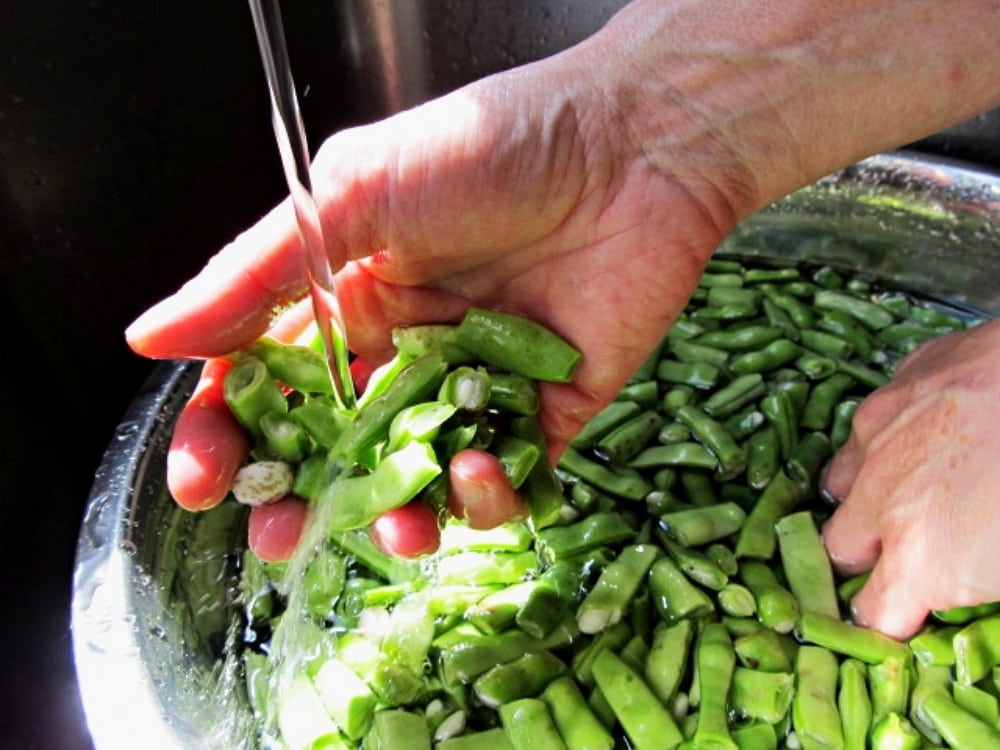
White half runners and greasy beans both need to be strung before eating.
After stringing and breaking green beans we cook them in a pot of water and season with bacon or salt pork. A small amount of olive oil or vegetable oil can also be used. Some folks use ham to season. Beans are slow simmered until the desired tenderness is reached.
Green beans can also be steamed, sautéed, roasted, or pickled in a variety of ways with or without other vegetables.
We can the green beans we grow each summer. They make up a big part of our diet. Another way of preserving green beans is to dry them.
Leather britches is the term for dried green beans in Southern Appalachia. The method of drying varies from family to family.
Beans are strung with needle and thread and hung until the beans are dried completely. Some folks remove from the string and store in a bag or in the freezer. Others leave the green beans on the string until they are ready to be cooked.
Cooking leather britches is a bit more trouble than cooking fresh green beans. The dried beans must be washed and then soaked in water until they are reconstituted a bit. The water is discarded, and then the beans are cooked in seasoned water much like fresh green beans, although leather britches take more time to fully cook. The texture and taste of leather britches is quite different from fresh or canned green beans.
Bush varieties of green beans are also popular in our area of Appalachia. They take up less space, but don’t produce as much and are harder to pick unless you enjoy bending over 🙂 Some folks choose to pull up the entire plant for picking one large harvest.
A few years back we started growing Mother Stallard green beans. They have become my favorite. You can read more about them here.
Last night’s video: First Mess of Beans and New Potatoes, Fried Green Tomatoes, Sidemeat, & Cornbread.
Tipper
Subscribe for FREE and get a daily dose of Appalachia in your inbox

Miss Tipper and Mr Matt, I sure Enjoyed watching y’all do your beans up the other day. They certainly were pretty. It reminded me of when my momma canned beans. Tipper what are your thoughts on freezer green beans? I am so afraid of using the pressure cooker for anything. I guess if I tried one it would be the ones with all the gadgets to make it easier, but at the cost, I think freezer beans would be most economical. Y’all are such a blessing to so many folks, I thank God for y’all. God bless those with special needs and help those who need healing or comfort and peace, in the name of our Lord and Savior Jesus Christ. Amen and Amen. Give Matt’s Daddy my regards and let him know we are rooting for him in his journey with cancer and all the treatments he’s going through. God bless everyone today, tomorrow and always. Remember Jesus saves. Amen
Jennifer, thank you!! I prefer the taste of canned, but lots of folks prefer to freeze their beans 🙂
Hi Tipper, The Chocolate pound cake is great, my wife baked it last night and we are enjoying it today. I know about green beans, my Mother and I canned 200 quarts one summer. I never got tired of them. Thanks for a great blog.
Greetings again and best wishes from hot Lucedale MS!! We usually plant bush beans down here for some reason, but I love them all. One of our local u-picks grew rattlesnake beans a couple years ago and after I saw yall grow and enjoy them I had to pick and cook me some. I remember them being delicious. They haven’t grown them since. I’m enjoying watching yall glean and cook the first of your garden harvest. Our summer goodness is about over already. I just got some deer stew from the freezer and going to have it with brown gravy over noodles for supper. Y’all have a wonderful and blessed day!!
We have almost always planted white half runners or some variety of half runners. My grandparents always planted the white half runners. My grandmother would always do leather britches. She had a screened porch off her kitchen and it would be full of strung leather britches. No matter what the variety of green bean, she would cook them in a pressure cooker for hours with a big piece of fatback! Finally, she did give up the pressure cooker, but still cooked them for hours.I don’t do leather britches anymore, but I admit we still cook our green beans plenty long with ham or fatback, and usually add potatoes and then have a side of cornbread, adding whatever garden vegetables we have for the day. Now that’s a wonderful meal. I have never heard of Mother Stallard, but they are a pretty bean. A lot of folks around here plant Turkey Craw.
Good morning Tipper. I love seeing y’all gardening. My grandmother and Daddy and Mama grew half runners, cornfield beans and my favorite, greasy cut shorts! They are so wonderful.
We have some raised beds for tomatoes, cucumbers and squash. Last year I found some greasy seeds to plant, just 2 small rows. They produced about 3 good messes. This year the beans have a wonderful vine but still waiting to see a bean. I’m wondering if the deer ate the blooms.
God bless y’all. We enjoy your channel, visiting with you and Matt and the girls too!♥️
Blue lake bush is my mom’s favorite green bean and therefore has become mine as well. They are so tender and delicious! I couldn’t count how many quarts of green beans my mom put up every year. Green beans are probably our most common side to any meal throughout the year. We just love them!
My mother used to plant what she called “little pink beans” from seed that had been in her family for many years. She might have called them “October beans” too. They would be the third in a succession of plantings every year.
Mommy never planted runner beans so we must assume they were a bush variety. Her little pink beans produced right up to the first frost. That’s when we would pull up the whole plant, shake the dirt off the roots and pick the beans right into the bucket.
I wish I would taken more of an interest in gardening when I was young and had saved seeds from those things Mommy grew but I didn’t and that’s that. Now I only grow Tipper beans!
Green beans are a favorite at my house too. We cook them a long time until we have to add water at least 3 times. I could make a meal of just them and cornbread.
Hi Tipper and Acorns. I enjoyed watching yesterday’s video. I think green beans are my favorite vegetable. I’ve grown, picked, strung, broke, canned, strung, dried, frozen, pickled, bought, sold and eaten tons of them in my 67 years. Johnson County, TN used to be known as “The Green Bean Capitol of the World” back in the 1930’s thru the 1950’s. My grandfather, W. Arthur Nichols, Sr. and his partner, V. L. “Beany” Walker ran the business. They owned a big bean market in Mountain City, the county seat. It made them wealthy. Every year the county held a big Bean Festival. Then grandfather died of pneumonia when daddy was 6yrs old. The business went to Beany and the grown children from grandfathers first wife (there were 9 of them) demanded the court award them and my grandmother equal shares of grandfather’s estate. She had 9 children of her own to raise. The court agreed with the children. It left grandmother destitute; they took the farm and house to be sold as well. She ended up living at the county poorhouse and married the man that ran it. He was a good man and a good grandfather. I keep Pappaw Tony, his family, everyone here and all the folks up Wilson Holler in my prayers. Please keep Ed and me in your prayers. it means so much. I love y’all.
I grew up in Johnson County (Shady Valley) and remember when picking beans was the only summer job available. I was about 12 and did some picking in the fields close to our house. Other people went where the work was, and traveled daily to nearby counties to harvest the huge fields of beans. A driver with wooden walls built up on the sides of a “cattle truck” drove around the main roads in the community and older kids and a few adults met the truck and climbed aboard for transportation to the picking fields.
It was hot and back breaking work. Bean pickers claimed two or more very long rows and went to work filling the tall bushel baskets, numbered to identify the picker to assure proper pay at the day’s end. Full pay per bushel was fifty cents, and must weigh 32 pounds.
One very pretty young woman in the community was famous for the amount of beans she could pick each day. On the first picking of a very productive field, she could pick 50 to 60 bushels in a day! (I once watched to try and see how she achieved such numbers. She seemed to move no faster than anyone else, but she filled her basket very quickly.)
Part way through the afternoon someone usually came through the field with an aluminum bucket of water to offer a drink to the workers. There was no bottled water, but a communal dipper everyone shared, drinking their fill and returning the dipper to the bucket.
I picked beans locally for just a couple of years, but I was happy to earn a little spending money and I sure learned the value of hard work. Can you imagine kids today working like this, and being happy to do it?
Picking beans was the second job I ever had. The first was picking strawberries, at five cents per quart basket. I was probably 10 when I first picked berries, as I was young and allowed only because my mother was the “clerk” who kept up with everyone’s production and calculated their pay, all done the old fashioned way without benefit of calculators. At the end of the day everyone was paid in cash.
But that is another story.
Green beans were the vegetable that we canned the most of – at least 150 quarts each summer. Mama would only grow white half-runners. Our neighbors would only grow Kentucky Wonder pole beans.
It is very interesting to me to see all of the different varieties of green beans in seed catalogs.
Green beans were the vegetable that we canned the most of – at least 150 quarts each summer. Mama would only grow white half-runners. Our neighbors would only grow Kentucky Wonder pole beans.
It is very interesting to me to see all of the different varieties of green beans in seed catalogs.
Wishing everyone a Wonderful Wednesday!!!
I love growing Kentucky Wonder beans. They’ve always produced the best for me. They are currently forming a glorious arch over my cattle plank trellis going into the garden. My grandma asks every year if I’m growing half runners. We like them with a hunk of country ham and potatoes with cornbread on the side . One of my favorite meals!
I do not know what the name of what my family grew was–both sets of grandparents and my parents (I guess everyone in my ‘circle’) just called them ‘snap’ beans. I know I have pulled the strings and snapped many a bean in my time as did my mom and grandmas. I also recall them tasting great raw but as good as they were fresh raw English peas (green sweet peas) were even tastier
Continuing to pray for your VBS this week….I can picture in my mind that your parents both helped out with VBS in some way –my grandma had her country store to run (when I was a kid VBS was held in the morning) but she supplied the pattern for crafts as well as much of the material and she supplied some of the kool aid and cookies. One year the project for my age group was a decorated pig made out of an empty bleach bottle another year is was a wooden pig much like the one in your kitchen, her or granddad cut out the wood but the kids varnished and sealed it. I remember both those crafts as if I made them last week lol. great memories, like the aroma from the roses that grew on bushes on both sides of our little church. I have another memory but I will have to consult my aunt for specifics on it before I tell that story (it involves one teacher taking her class every year across the road to the cemetery)
I never knew green beans were so varied! I want to try all those ways of enjoying them!
My grandmother is here visiting with us, and I am going to ask her about summer meals when she was a child in the forties. Her mother always grew a big garden and her daddy drove a milk truck and grew cotton for a farmer. She surely has some wonderful memories I am excited to hear!
Tipper–I wonder whether you or any of your readers have ever heard leather britches called fodder beans? It makes sense in a way because they are dried fodder for humans just like other dried plant material can be fodder for livestock. I heard the usage occasionally as a boy but haven’t encountered it in a long time.
Jim, I have heard them called that and also shucky or shuck beans 🙂
I love green beans too. Last nights video reminded me of how granny and my daddy would cook a big ole pot of green beans with small red potatoes placed on top; often once okra was coming in several small okra pods were gently placed on top and the lid was closed to let them steam till done. Lots of salt and pepper and you’ve got a feast! I’d eaten many meals from just that bean pot. I’ve done it a couple times, but Gil doesn’t like steamed okra. He wants it fried. I love it boiled or steamed; “Mr Slick” as daddy would call it.
I grew the rattlesnake beans y’all spoke of in 2024 in honor of my dad; he passed away in March of that year. I had about 8 plants along a back fence and got several small messes for Gil and I. They were tasty. I’ve not grown beans since. Maybe one day. This year I’m trying the Malabar spinach and it’s growing pretty good; I may pick some soon and try that creamed spinach recipe you make.
I have limited space, but garden for fun. I, too, like to watch seeds grow. Thanks for letting us celebrate Appalachia with you.
I have always enjoyed a good pot of green beans with new potatoes. The additions that made my mom’s and both grandma’s beans so yummy to me were bacon, bacon grease, chunks of onion and a bit of sugar. Ohhhhh the broth from those beans was so addictive!! I have to confess that until I came to know Tipper and Matt by way of CA & BPA, I didn’t realize the extent of the varieties of the humble green bean. Like Randy mentioned , Blue Lake bush and Kentucky pole runners were all I knew of and they were used depending on how much room you had in your garden. I’ve certainly enjoyed my green bean education course the past couple of years. I didn’t know anyone loved a pot of garden fresh green beans like my mom did, til I “met” Granny♡ She and my mom(whom I lost in an accident with my aunt/her sister in Aug of ’21) were less than 2 months apart in age. I swear if Granny had been as silly for cherries, lol I’d have sworn they were related somehow. Tipper, I love your posts on here as they never fail to bring back the sweetest memories from my past. You are a treasure and as your acorns share their stories, it makes me happy to know so many of us share a similar past. In an ugly old world (atm) that’s bent on driving us apart…I see people joining as one in a positive , uplifting way. Hope you all and your families, too, enjoy a beautiful, blessed day!
Most string beans I remember were striped half runners, Kentucky Wonders, and corn field beans.
I’ve been seeing them beans in them videos, they sure look good, God bless Papa Tony, Lord Heal his body and make him well in Jesus name,
We love our greenbeans here and we also save the seed. We started growing Rattlesnake pole beans about 10 years ago and never looked back. For us pole beans are so much easier to pick instead of bending over like we did for close to 30 years. I love bush beans, but pole beans are the top choice.
My Northern friends or friends from another country think we cook our green beans to death and they do not like them. Not my favorite vegetable except for the first mess of the season, cooked with new potatoes like in your video. Fresh speckled butter beans or crowder peas or any kind of peas, I could eat everyday!
I love watching you and Matt in the kitchen. Y’all are a perfect team!
Last nights CA post discussed peanut beans and the inability of some people to find the seeds in their area. I got online and found several seed companies that said peanut beans were the common name for Pink half runners. The pictures they shared showed the bean pods would turn pink if left on the plant long enough. Is that your experience with them in Wilson Hollow?
Thank you Robert! I’ve not noticed them turning completely pink but sometimes there are a few pinkish lines on them 🙂
Robert mentioned them being half runners. Aren’t your’s bush beans?
Yes mine are bush beans 🙂
Green beans are my favorite side with pretty much any meal. Mine aren’t near as good as my Granny’s were. I never found out her secret to cooking green beans but I’m still trying to figure it out. We grew up 2 hours away from family, on both mom’s and dad’s side, so we missed out on learning a lot of lessons from both our grandmothers. Still, I continue to try to “crack the code” on how Granny cooked her beans. Snapping beans with Granny- we did get to occasionally enjoy this favorite pastime. Sweet memories of Granny, mama, my sister, and usually my Great Aunt Mae, and me sitting on Granny’s back porch and snapping beans. My sister and I would hear all the latest gossip, about people we didn’t know, and I can almost hear Granny and Aunt Mae’s voices now just thinking about it. Thank you for sharing and sparking some sweet memories from my childhood.
Love, prayers, and blessings to you & your family!
Green beans have always been a staple in our garden growing up and steel are in my garden. Dad and mama loved the white Half Runners up until a few years before they passed away. The Peanut Beans were a favorite to. Lucky planted those this year. Beside his shop Fleet Trucking in Knoxville, the Knoxville Seed carries these seeds along with many varieties of flowers and tools. Our favorite over the years have been Rattlesnake Beans. They really produce good beans with many beans on each vine. The beans are long and rarely many bad spots on them. Last year off of two short rows, we had around 5 bushels. Green beans in our area of Blount and Sevierville County I was told are selling for $60.00 a bushel. I have canned so far this year for some Christmas gift baskets and ourselves and family: Tomatoes, Cucumber Salsa, Mango Pineapple Salsa, Kraut, Vegetable Soup, Blackberry Jelly, Cucumber Mint Jelly, Icicle Pickles and making Lemon Blueberry Jelly soon. I wasn’t even going to can this year. Lucky set out a very few plants, but I let anything just go to waste when food is so high and God has blessed our garden. You can’t get the taste from beans or blackberries in any bought or frozen foods you buy. God bless everyone. Tipper and Matt just want to let you all know that I pray for your followers. Have a blessed day in the Lord.
Green beans grown in our big gardens were a large part of our yearly food supply. Two favorite varieties I remember were Blue Lake bush and Kentucky Wonder pole beans. Many times the pole beans would be planted in between stalks of field corn and would climb up the corn stalk. My aunt lived at Chattanooga, Tennessee on a large lot of rich black dirt bottom land and would have a garden in her back yard. I have a picture of her along with my uncle growing pole/running beans one year and of them having to use a stepladder to pick the beans from a tent like frame made with bamboo canes. I don’t remember how many bushels she said they picked that year. I do remember her saying the beans were grown from heirloom seed from the early 1900’s that had been saved and passed down through her friend’s family and given to her. Green beans cooked with ham and some taters, a pone of unsweetened corn bread and a mason jar of slightly sweetened ice tea, will as someone said in their comment yesterday, make my tongue smack my brains out. Wonder if that is what happened when eating like that and the reason I am so dumb! I remember eating so many green beans at a meal one time when I was a child I made myself sick, let’s just say I love eating green beans. I did the same thing as a kid eating fresh hog liver, after doing that I have never have been able to stand the sight or taste of any liver from anything and will not even use it even for catfish bait.