
Up until the middle of the 20th century, and in some areas well beyond that point, if you lived on a farm or even in a small town with an acre or two of land, raising hogs for meat was pretty taken for granted. Often, a few extra pigs would also provide a welcome source of “cash money.” Lyrics from Loretta Lynn’s poignant autobiographical song, “Coal Miner’s Daughter,” are quite suggestive in that regard.
In the summertime we didn’t have shoes to wear,
But in the wintertime we’d all get a brand new pair.
From a mail order catalog, money made from selling a hog,
Daddy always managed to get the money somewhere.
Hog killing time was a seasonal ritual of immense importance. It marked the culmination of many months of hard work with crops and livestock and was the final, vital step in preparation for the ardors of coming winter. Fittingly, hogs were most commonly butchered a week or two before Thanksgiving, and once lard had been rendered, sausage and cracklings canned, hams launched in the early steps of the smoking or curing process, and lesser cuts salted down to provide fatback and streaked meat for the months ahead, country folks could come about as close to rest as they ever did. The menfolks had some spare time for hunting, womenfolks could look with pride on the final year’s additions to cannery shelves, and everyone feasted on pork. From the magical day in November when many hands and hard work pitched in for killing and processing hogs forward, one key part of life’s annual cycle had ended and another one begun. Along with spring’s greening up time, it marked a key moment in how life was lived and what foods were consumed.
Almost without exception, pork was THE meat in Appalachian daily diet. Chicken was reserved for special occasions (that explains the name frequently applied to it, “preacher bird”), beef was a rarity, while fish and game depended on sporting success and/or available time to take to the woods or waters. Pork, by way of sharp contrast, was consumed in some form virtually every day and more often than not it made an appearance in two or three meals.
Breakfasts tended to be large and, by today’s standards, would be reckoned lavish. Pork offered in some fashion–sausage, bacon, scrapple, head cheese, country ham, liver mush, streaked meat, or gravy based on a cut of pork or renderings from the meat—was pretty much standard breakfast fare. With the notable exception of ham, most breakfast meats, at least as the two of us have known them, come from scraps and inferior pieces of pork. Furthermore, aside from venison sausage, we have almost no recollections of other meats for breakfast.
—Celebrating Southern Appalachian Food written by Jim Casada & Tipper Pressley
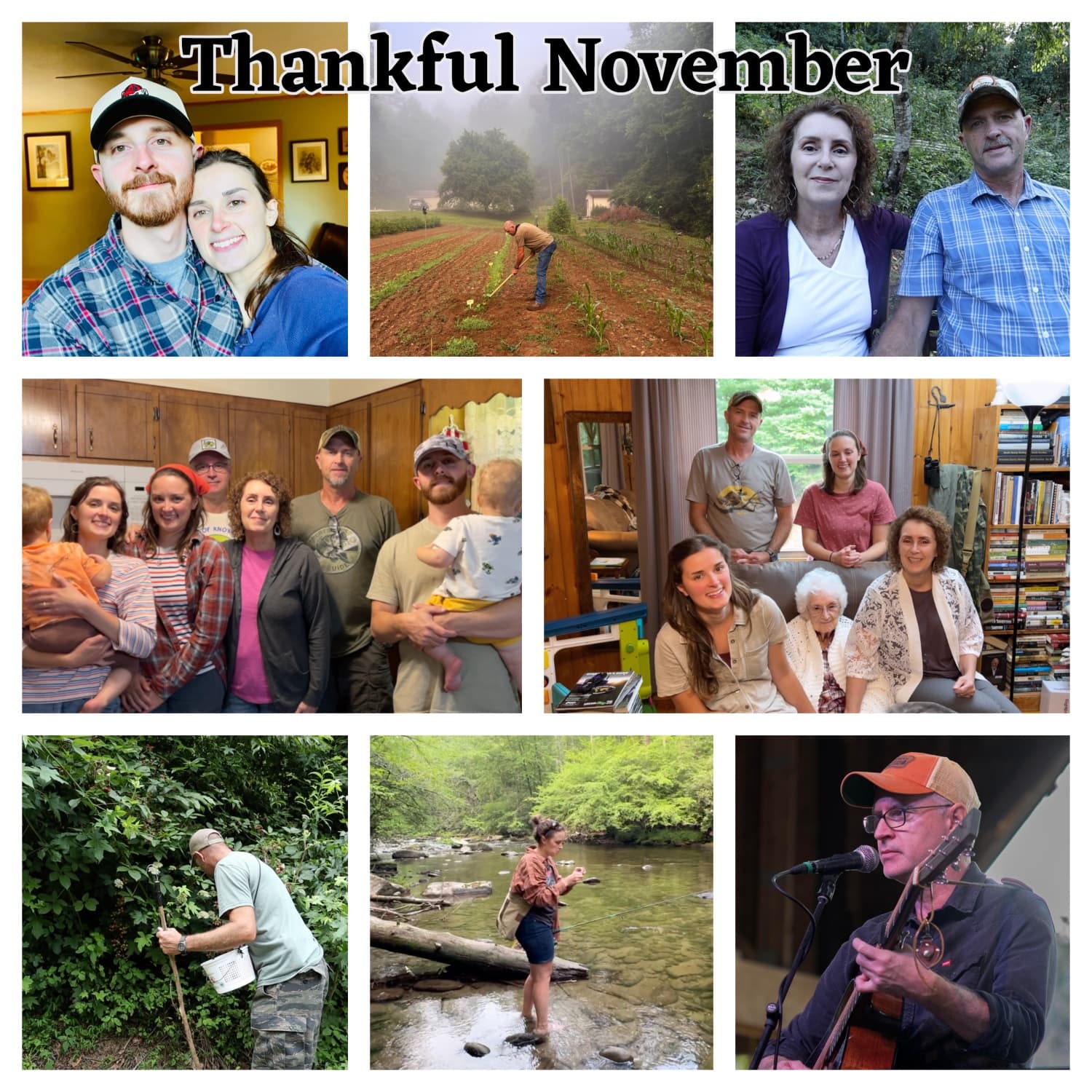
Today’s Thankful November giveaway is copy of Celebrating Southern Appalachian Food written by Jim Casada & Tipper Pressley. To be entered in the giveaway leave a comment on this post. Giveaway ends November 27, 2026.
You can pick up a copy of our cookbook here.
Last night’s video: It Was Dangerous But Matt Got It Done.
Tipper
Subscribe for FREE and get a daily dose of Appalachia in your inbox
